Fulbright Philippines, Full Heart and Full Belly
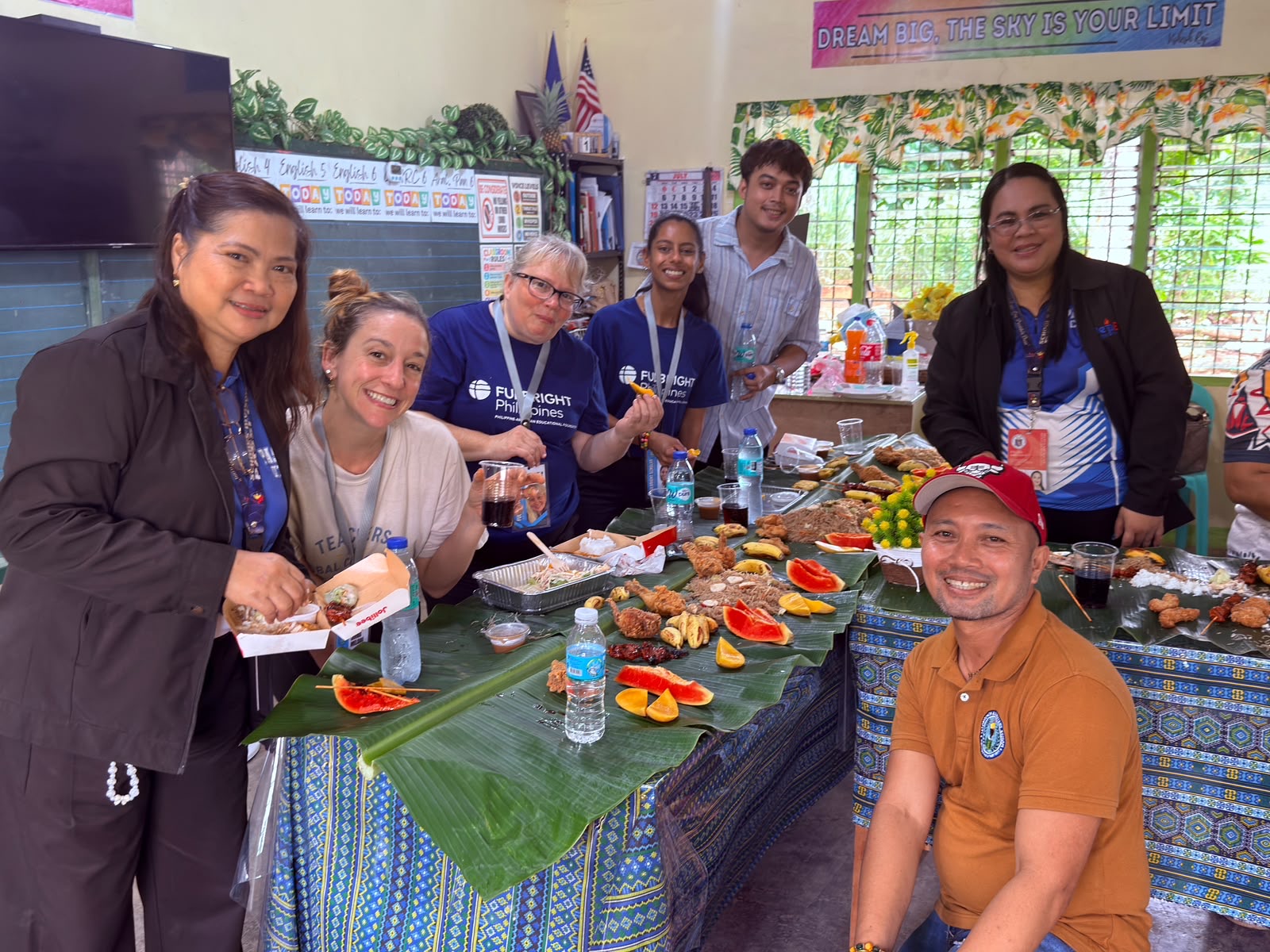
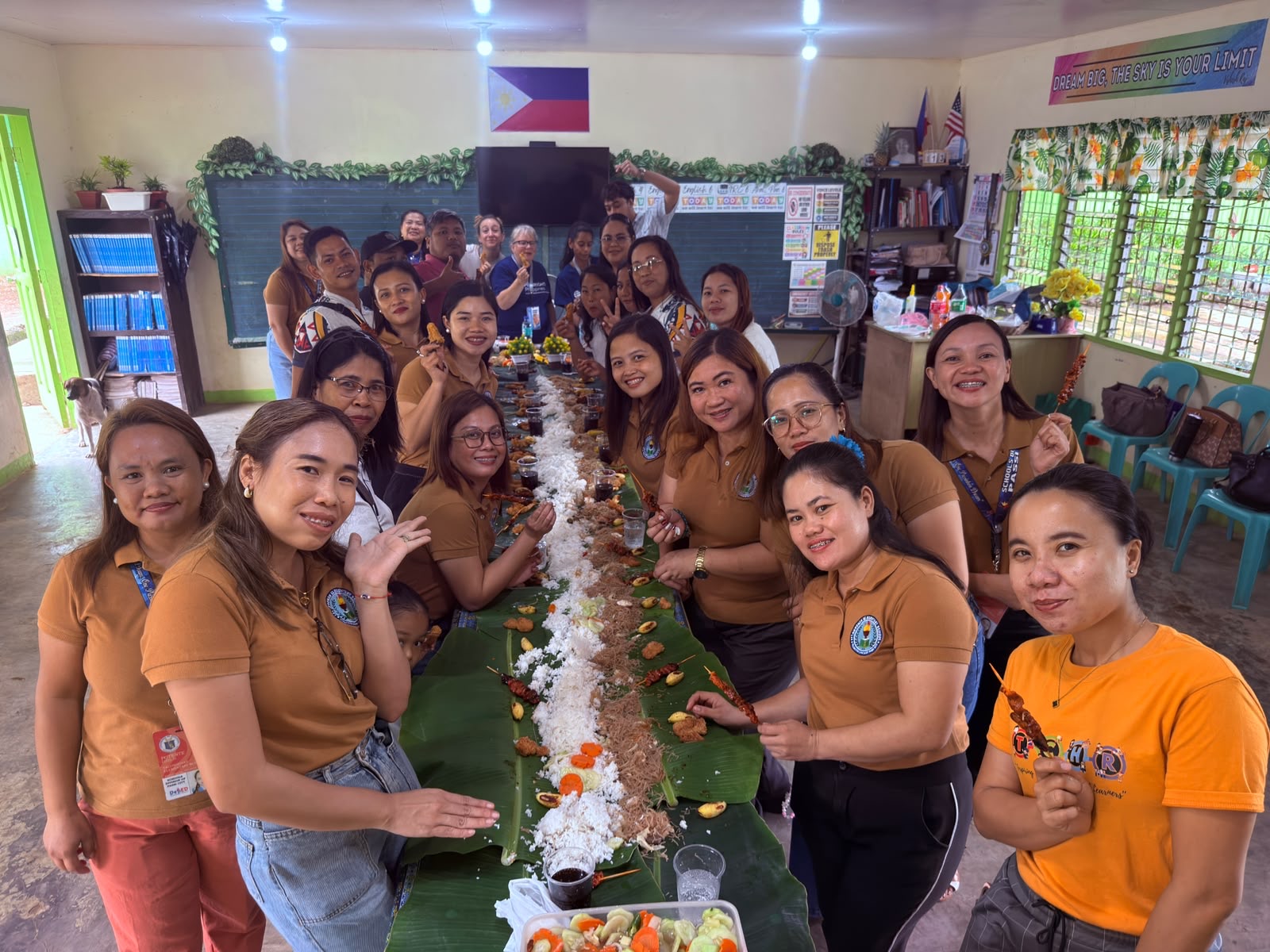
What is Filipino culture? It's a smiling face with a hand gently placed over a heart, and a slight bow of the head to say hello. It's a boodle fight, a traditional feast shared with friends, family, or coworkers. It's bright colors against the backdrop of a rainy Manila sky or the reverberating beat of Abba's "Dancing Queen" bouncing off the walls of a karaoke club. Filipino culture is warm and comforting, like an old friend or a grandmother welcoming you home.
My first experience with Filipino culture was through my brother-in-law's stepmom, Julie. Lola Julie is always smiling, laughing, and wanting to feed us. Whenever I think of Filipino culture, I think of her. My first time in the Philippines was during my honeymoon in 2016. My husband and I traveled to El Nido, Palawan. We lost our suitcase on the ride to our hotel, and before the sun came up, people from the community were already looking for our belongings. Once we were settled, we could finally take in the beauty of our surroundings. Filipino culture is shaped by its surroundings. Breathtakingly beautiful islands surrounded by bright blue and turquoise waters. A warm welcome and incredible views, a full-heart moment.
Ten years later and I'm back, swapping paradise for purpose. This time I am here as a member of the Fulbright Teachers for Global Classrooms program. This time in Manila, I did not know what to expect. The Fulbright Philippines experience was more than I could have imagined. It exceeded every expectation. From our welcome in Manila with the PAEF crew, Roch, Derrick, and Jabes, to my host city with Sir Reymund Lara, I walked away each day with a full belly and a full heart.
A large part of Filipino culture is their food, how they prepare it, and who they share it with. Starting with breakfast at the hotel, which consists of freshly made coffee, fruit, noodle soup, congee, rice, eggs, pastries, and at least one pork dish, we already had enough to last through the morning. But, alas, morning meetings. They cannot move forward without more coffee, biko, palitaw, kutsinta, and/or puto (my favorite). And as in many cultures around the world, refusing to eat food that is offered is just plain rude. This whole process repeats itself for every meeting throughout the day. Like I said, full belly.
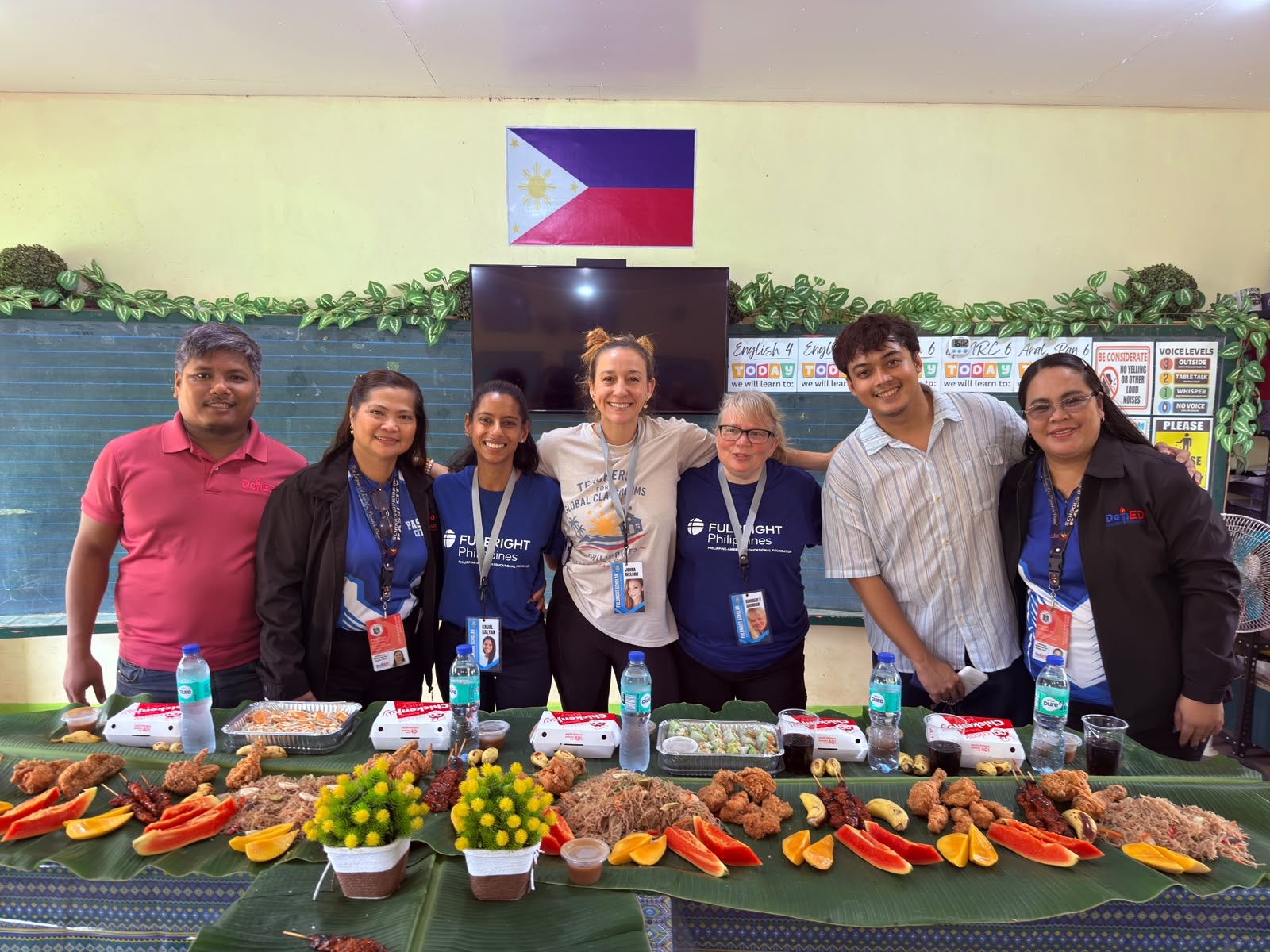
Filipino culture is centered on the concept of kapwa, a shared identity, seeing oneself in others. Kapwa is built on the foundation of Filipino pakikipagkapwa-tao, to show helpfulness, trust, and deep respect for human dignity. This is more than hospitality. These are acts of love. Expressions of love for all people. This was clearly shown through the actions of our PAEF hosts and my host teacher, Sir Reymund. I will carry these experiences and newly built friendships with me as I return to the US…full-heart moment.